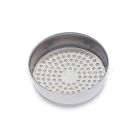
Brewing Group Fitting 1/4m Folder - 1/4m
Delivery Estimate
 4 payments of $3.03
 Buy now, Pay Later
label it as "Country of Origin:".
(Only if compatibility.brands is not empty. List them comma-separated inline — same order as the JSON — no bullet points.)
Compatible models
(Only if compatibility.models is not empty. Show as a two-column table, only if ≥4 model families. Otherwise a brief sentence or list.)
Part cross-reference codes
(Only if cross_reference is not empty; if empty, skip this section entirely)
Known manufacturer SKUs:
- List EVERY entry as: `code` (`manufacturer` — `notes`)
Make sure cross-reference notes are lowercase. Don't say "supplier" or "fitment" or "NLA," rephrase contextually in brackets.
Have questions? We're here to help.
If you're unsure about compatibility — or have questions about part numbers, what you need for your machine, or anything else — reach out. Our team knows these parts inside-out and can point you in the right direction.
<br/>
---
JSON-LD schema
Return two schema blocks in fenced JSON:
1. Product schema
```json
{
"@context": "https://schema.org",
"@type": "Product",
"name": "[H1 from above, minus the #]",
"description": "[First paragraph from body text — the 2-3 sentence opener that names the problem + brands]",
"sku": "[use SKU from input]",
"brand": {
"@type": "Brand",
"name": "Coffee Parts"
},
"offers": {
"@type": "Offer",
"availability": "https://schema.org/InStock",
"priceCurrency": "AUD",
"seller": {
"@type": "Organization",
"name": "Coffee Parts"
}
}
}
```
2. FAQPage schema
Generate a JSON-LD FAQPage schema with 3-5 questions based on:
- Top compatible brand/model combinations (e.g., "Does this fit [Brand] [Model]?")
- Key specs from the specifications data (e.g., "What temperature rating does this part have?")
```json
{
"@context": "https://schema.org",
"@type": "FAQPage",
"mainEntity": [
{
"@type": "Question",
"name": "[natural customer question]",
"acceptedAnswer": {
"@type": "Answer",
"text": "[clear 1-2 sentence answer, citing spec or compatibility data]"
}
}
]
}
```
---
SEO metadata (Markdown table)
Present this as a markdown table with two columns: Field and Content.
| Field | Content |
|-------|---------|
| Meta Title (55-60 chars) | [Include primary keyword (part type + code/size), top 1-2 brands, "Coffee Parts"] |
| Meta Description (140-155 chars) | [Include part type, code/size, top 3 brands, "Australian stock" or similar trust signal] |
Use Australian English spelling throughout (e.g., "vapour" not "vapor", "litre" not "liter").
Avoid unverifiable marketing claims like "premium quality," "best," "professional-grade," "OEM" unless the input explicitly confirms OEM or contains a first-party quality certification.
ONLY use data from the JSON. Do not hallucinate compatibility, specifications, or features.
Never use em dashes, equals signs, or brackets in the H1.
---
Technical check: do not skip models
Before submitting, run a final check for EVERY brand in `compatibility.brands`:
- Count how many models are listed in the input JSON for that brand
- Count how many appear in your output
- If the counts don't match, you MUST revise to include all models
For example, if the input shows:
```json
"compatibility": {
"brands": ["Rancilio"],
"models": [
{"brand": "Rancilio", "models": ["Silvia V1", "Silvia V2", "Silvia V3", "Silvia V5", "Silvia V6", "Silvia Pro", "Silvia Pro X"]}
]
}
```
then your output MUST list all seven Silvia variants. Summarising them as "Rancilio Silvia (all versions)" is not acceptable.
If the input shows 43 La Marzocco models, your output must show all 43. If it shows 8 cross-reference codes, your output must show all 8. No truncation, no "and more".
---
Response format:
Return RAW MARKDOWN ONLY. No preamble, no explanation, no "Here is the description:". Just the markdown, starting with the H1.
YOU MUST include the JSON-LD blocks (both Product and FAQPage) in fenced code blocks, and the SEO metadata table. If you omit them I cannot use your response.
Always verify compatibility with your machine's user manual before purchasing.
Compatible Part Numbers
You may also like...